
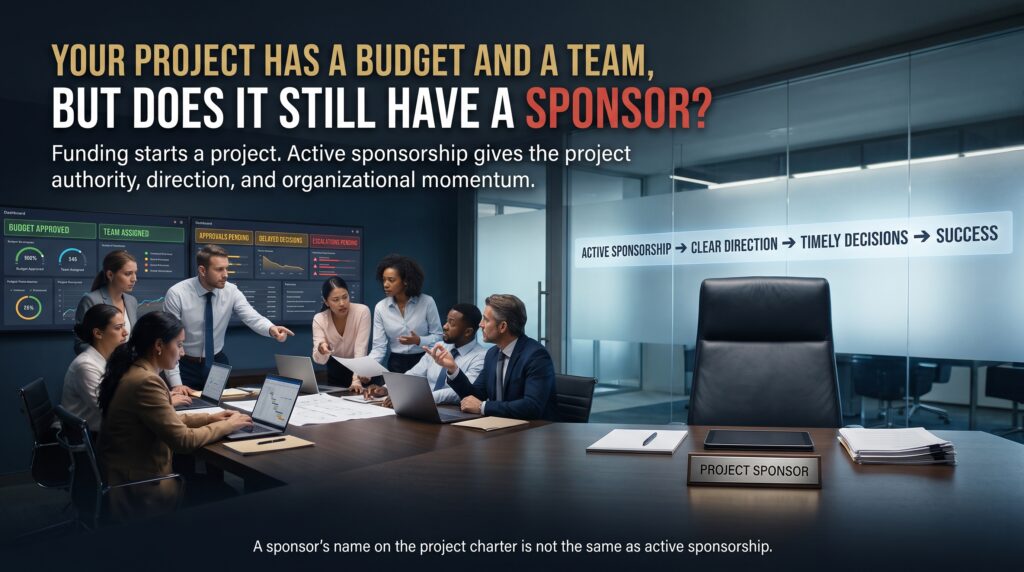
A project sponsor is the senior person who owns the reason a project exists, and when that person quietly drifts away, even a well-funded, well-staffed project can start to wobble. The budget is approved. The team is busy. The plan looks tidy on the screen. Yet nobody with real authority is answering the hard questions, and the work slowly loses its reason for being.
It is one of the most common and least discussed problems in project delivery. In offices from Melbourne to Perth, projects rarely collapse with a bang. They stall. Decisions sit in inboxes for weeks. Scope creeps because nobody will say no. Then, months later, somebody asks the awkward question: who is actually sponsoring this?
This guide explains what a project sponsor really does, how sponsors quietly disappear, the hidden costs of a missing sponsor, and a practical plan to win one back. We will also look at how structured project management courses online help project managers work with sponsors far more confidently.
What Is a Project Sponsor and What Do They Actually Do?
A project sponsor is the person, usually a senior leader or executive, who is ultimately accountable for a project’s success. They hold the business case, they usually control or protect the funding, and they have the authority to make the calls that the project manager cannot. In some organisations the role is called an executive sponsor. In AgilePM, the same idea appears as the Business Sponsor.
In practice, an effective project sponsor does six things:
- Owns the business case. They can explain, in a sentence or two, why the project matters and what success looks like.
- Secures and protects funding. They defend the budget when priorities shift and agree to changes when they are justified.
- Removes roadblocks. They clear the political and organisational obstacles that the team cannot clear alone.
- Makes escalated decisions. When the project manager hits a trade-off beyond their authority, the sponsor decides, and does it promptly.
- Champions the project. They keep the work visible to senior leaders and build support across the business.
- Owns the benefits. They make sure the finished work actually delivers the value promised, not just a closed task list.
It helps to see how the sponsor differs from the other roles around the table:
| Role | The question they answer | Typical focus |
| Project sponsor | Why are we doing this? | Business case, funding, authority and benefits |
| Project manager | How do we deliver it? | Plan, schedule, risks and day-to-day control |
| Steering committee | Are we still aligned and on track? | Governance, oversight and major decisions |
| Project team | What do we build or do next? | Delivering the work products |
The Day You Realise Your Project Sponsor Has Gone Quiet
Picture a mid-sized organisation rolling out a new customer platform. At the kick-off, the executive sponsor gave a confident speech and approved a healthy budget. Six months later she has been promoted to a bigger role, her calendar is packed, and her replacement has inherited the project as one item among forty.
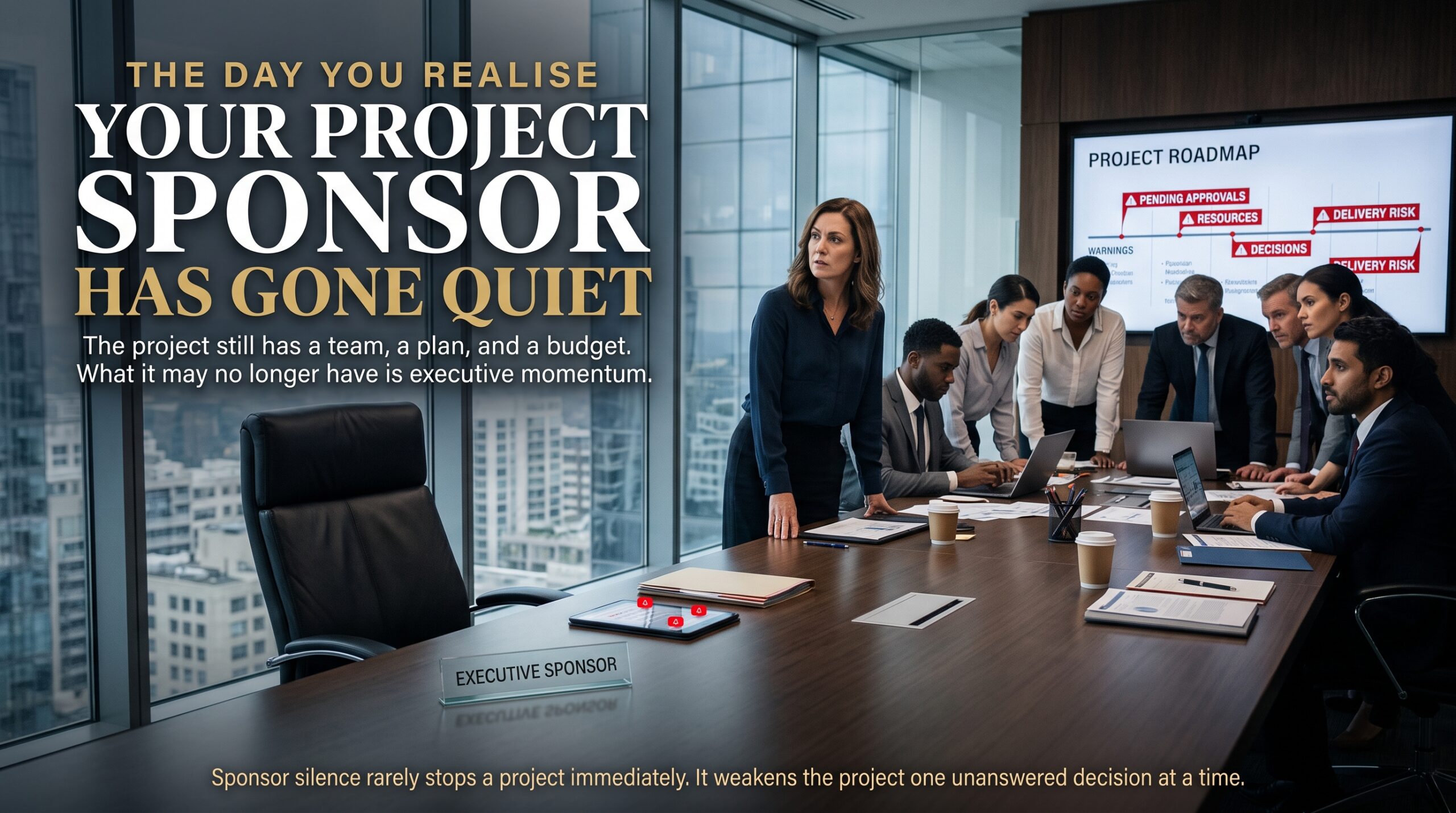
Nothing dramatic happens. The weekly status report still goes out. But a change request has waited three weeks for sign-off. A key stakeholder is pushing for extra features and nobody senior will push back. The project manager keeps asking for ten minutes and keeps getting a rescheduled invite. The project has a budget and a team, but it no longer has a sponsor in any meaningful sense.
This is a composite scenario, yet almost every project professional has seen a version of it. Sponsors rarely walk away on purpose. They drift, and the reasons are usually ordinary:
- They are promoted, moved or leave the organisation.
- A restructure or a change in strategy shifts their priorities.
- They are simply overloaded and treat the project as someone else’s job.
- They were a sponsor on paper only, named on the charter but never really engaged.
Whatever the cause, the result is the same: a project that keeps moving without anyone steering it.
The Hidden Costs of a Missing Project Sponsor
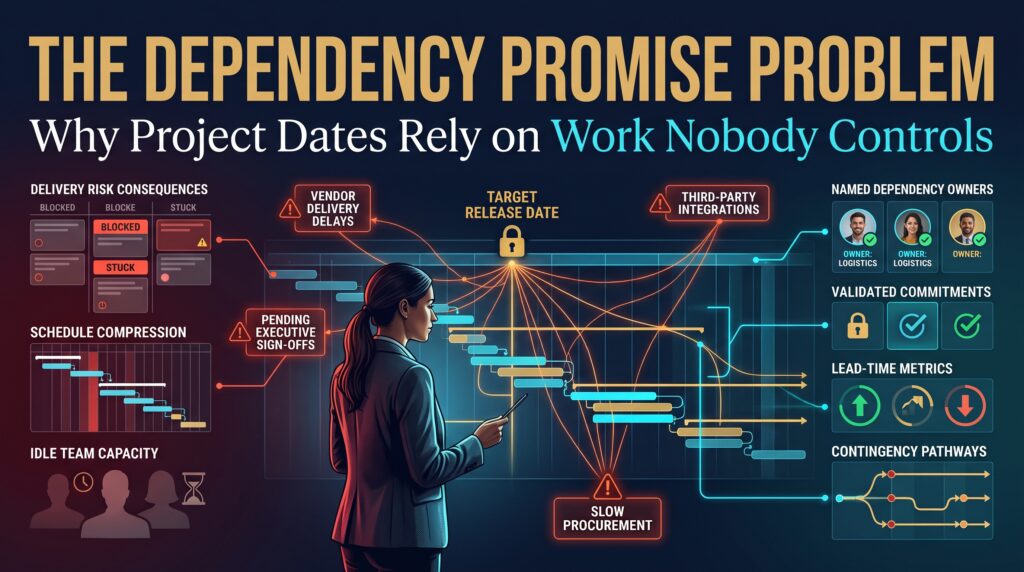
Because the damage builds slowly, it is easy to blame other things. Here is where the cost of a disengaged project sponsor really lands.
1. Decisions stall and deadlines slip
Project managers can plan and coordinate, but they cannot approve a trade-off above their authority. When the person who can decide is unavailable, work waits. A two-day question becomes a two-week delay, and those delays compound.
2. Scope creep goes unchecked
A strong sponsor is the person who can say “not now” to a loud stakeholder. Without that backing, every request starts to look reasonable, and the project quietly grows beyond its budget and timeline.
3. Funding and priority are put at risk
When a project has no senior champion, it becomes the easiest thing to cut when budgets tighten. Funding can be reduced or redirected before anyone notices the project has lost its protector.
4. The team loses direction and motivation
People work harder when they know someone senior cares about the result. When that visible support fades, teams start to wonder whether the work will even be used, and energy drops.
5. Stakeholders pull in different directions
Without a sponsor to settle disagreements, competing departments each push their own preferences. The project manager ends up refereeing political disputes that were never theirs to solve.
6. Benefits are never realised
This may be the costliest effect. A project can finish on time and on budget yet deliver little value if nobody owned the outcome. Benefits do not realise themselves. Someone has to be accountable for them, and that someone is the sponsor.
Add these together and the price of a missing project sponsor is rarely small. It just appears as lots of small, separate problems instead of one obvious failure.
Warning Signs Your Project Sponsor Has Checked Out
Not sure whether your sponsor is still engaged? Check how many of these sound familiar:
- Steering meetings are repeatedly cancelled, shortened or attended by delegates.
- Requests for decisions take weeks, or get answered with “let’s park that.”
- The sponsor cannot clearly explain what success looks like.
- Nobody can say who would approve a major change tomorrow.
- The sponsor appears only at launch events and milestone celebrations.
- Status reports go unread and questions go unanswered.
- Senior leaders stop mentioning the project in conversation.
- The project manager is making decisions that belong above their pay grade.
If you ticked three or more, treat it as a risk and act early. These problems get harder to fix the longer they sit.
What an Engaged Project Sponsor Looks Like
Engagement does not mean micromanaging. A good project sponsor gives the project steady attention and clear authority, and then lets the team do the work. The contrast is easy to spot:
| Area | Engaged project sponsor | Absent project sponsor |
| Decisions | Answers escalations within days | Leaves questions sitting for weeks |
| Scope changes | Weighs each change against the business case | Lets changes slip in unchallenged |
| Funding | Defends the budget and agrees justified changes | Allows funding to erode quietly |
| Team morale | Shows visible support and interest | Appears only at launch and review time |
| Reporting | Reads reports and asks sharp questions | Skims or ignores updates |
| Benefits | Tracks value, not just task completion | Assumes benefits will take care of themselves |
How to Re-Engage a Disappearing Project Sponsor
You do not need a dramatic confrontation. You need to make the sponsor’s job easy, specific and clearly worth their time. Here is a sensible order of attack:
- Name the problem early. Raise it privately and calmly. Something like “I need faster decisions to hit our date” lands better than “you have been absent.”
- Restate the business case on one page. Remind the sponsor why the project matters, what it costs and what it should deliver. A short, sharp page reconnects people to the purpose.
- Agree a small, fixed time commitment. A regular 30-minute check-in every fortnight is far more realistic than a vague promise of “availability.”
- Bring decisions, not just updates. Sponsors engage when they can actually do something. Present the options, give your recommendation and ask for a clear yes or no.
- Talk benefits, not tasks. Show progress in terms of value delivered and risk reduced. That is the language senior leaders care about.
- Use your governance. If the sponsor stays unavailable, escalate through the steering committee or the sponsor’s own manager, and record the delay and its impact.
- Ask for a formal replacement if needed. If the sponsor truly cannot give the time, request a named successor with the authority to act. A project without a sponsor is a project without a decision-maker.
Small, regular habits beat big gestures. Half an hour every fortnight with a committed project sponsor is worth more than a polished presentation once a quarter.
What to Do When Your Project Sponsor Leaves Mid-Project
Sometimes the sponsor leaves for good. If that happens, move quickly and in a structured way:
- Pause and assess. Work out what decisions and approvals are currently waiting.
- Get a proper handover. Ask the outgoing sponsor to brief their successor on the history, commitments and political context.
- Confirm authority. Make sure the new project sponsor has the same level of budget and decision-making power.
- Revalidate the business case. Priorities may have changed, so check the project still makes sense.
- Decide how to proceed. Continue, adjust the scope or stop. All three are legitimate outcomes if the decision is made deliberately.
Why Project Management Training Helps You Work With Your Sponsor
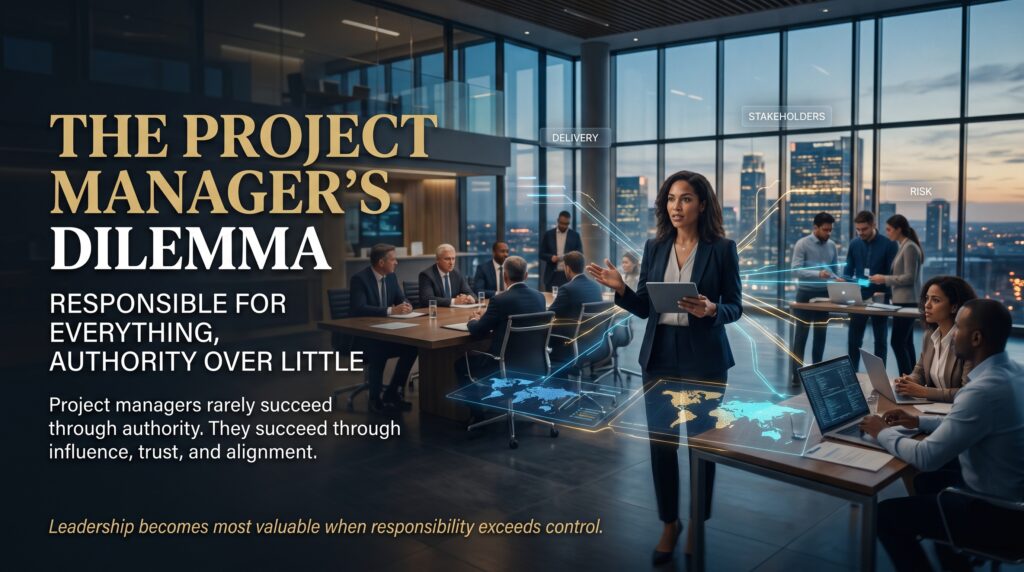
Managing upwards is one of the hardest parts of the job, and it is rarely taught on the job. Strong project managers know how to frame a decision, present options, escalate through governance and keep a busy executive engaged. Those are learnable skills, not personality traits.
Agile frameworks make this explicit. The AgilePM Foundation course introduces the roles, responsibilities and governance of Agile project delivery, including the Business Sponsor and how that role supports the team. If you already know the basics and want to apply them to real projects, the AgilePM Practitioner course builds on that foundation with practical application. You can compare both on the courses page, and learn more about the team on the About Us page.
Good training also covers the wider skills that keep a sponsor engaged: stakeholder communication, risk management, budgeting and project governance. If you want to read further on the profession itself, the Project Management Institute and the Australian Institute of Project Management publish useful standards and resources, and the Agile Business Consortium is the home of the Agile project management framework.
If you have questions about which option suits you, the FAQs page is a good starting point, and you can browse more articles on the project management blog.
Project Management Courses Across Australia
Whether you are upskilling a team or building your own career, there is an option near you. Classes are available full-time on weekdays, part-time on weeknights or weekends, and as live virtual online sessions:
- Melbourne: explore project management courses in Melbourne at the West Melbourne campus.
- Sydney: book project management training in Sydney based in Surry Hills.
- Brisbane: study project management courses in Brisbane in the city centre.
- Adelaide: choose project management training in Adelaide through live online or in-house delivery.
- Perth: take project management courses in Perth online or arrange in-house team training.
- Canberra: join project management training in Canberra, delivered live online or in-house.
You can see every option on the locations page, or simply contact the team to talk through what fits.
Frequently Asked Questions About the Project Sponsor Role
What is a project sponsor?
A project sponsor is the senior person accountable for a project’s success. They own the business case, usually control the funding, make the high-level decisions and make sure the project delivers its intended benefits.
What does a project sponsor do?
They champion the project, secure and protect the budget, remove organisational roadblocks, make escalated decisions and take responsibility for the benefits at the end.
What is the difference between a project sponsor and a project manager?
The sponsor answers “why” and holds the authority and the benefits. The project manager answers “how” and handles planning, delivery and day-to-day control. They work as a pair, and the project suffers if either is missing.
Is a project sponsor the same as a stakeholder?
No. Every sponsor is a stakeholder, but not every stakeholder is a sponsor. A stakeholder is anyone affected by or interested in the project. The sponsor is the one accountable for it.
What happens if a project has no sponsor?
Decisions stall, scope creep goes unchecked, funding becomes vulnerable and benefits are rarely realised. Most project methods treat a named, active sponsor as a basic requirement.
Who can be a project sponsor?
Usually a senior leader with enough authority to approve the budget and make decisions for the project. It should be someone who also has the time and interest to stay involved.
Can a project manager also be the project sponsor?
On very small projects the roles sometimes overlap, but it is generally best to keep them separate. The sponsor’s independence and seniority are what make escalation and oversight work.
Check Your Sponsor Before You Check Your Budget
A project can lose its project sponsor without anyone formally noticing. The budget still shows as approved and the team still turns up, but the direction and the decision-making power have quietly gone. The good news is that the fix is usually practical: name the problem early, make the sponsor’s role specific and easy, and escalate when you need to.
Want to build the skills to lead projects, and sponsors, with confidence? Explore the AgilePM Foundation and AgilePM Practitioner courses, browse all project management courses, or speak to the team to find the right pathway for you or your organisation.