



Project management career growth should be straightforward: deliver good projects, get noticed, move up. So why do so many reliable project managers watch colleagues overtake them while their own title stays exactly where it was?
If that sounds familiar, you’re not imagining it. You hit the milestones. The budget held. The client sent a thank-you email. And still the promotion went to someone else, or “senior” keeps slipping to next year’s review.
Here’s the honest version. Delivering successful projects is what gets you hired. It isn’t what gets you promoted. This guide explains why project management career growth stalls even for strong performers, and what top project leaders do differently. It’s written for project coordinators, project managers, team leaders and business analysts across Australia, from Melbourne and Sydney to Brisbane, Perth, Adelaide and Canberra.
Delivery Is the Entry Ticket, Not the Promotion
Think about how promotions actually get decided. A manager, a director, sometimes a panel, sits in a room and asks one question: can this person handle bigger, messier, more political work than they do now? Your last five green dashboards are evidence, but they’re only part of the answer.
A successful project proves you can execute. Project management career growth needs proof that you can influence, prioritise and make decisions when nobody hands you a clear plan. Those are different muscles. Plenty of excellent delivery people never train them, because the day-to-day job doesn’t force them to.
There’s a second problem. When you’re good at delivery, you become the person who “just gets it done”. That’s a compliment and a trap. Leaders hate moving their most dependable operator, so the safest option for the organisation is to leave you exactly where you are.
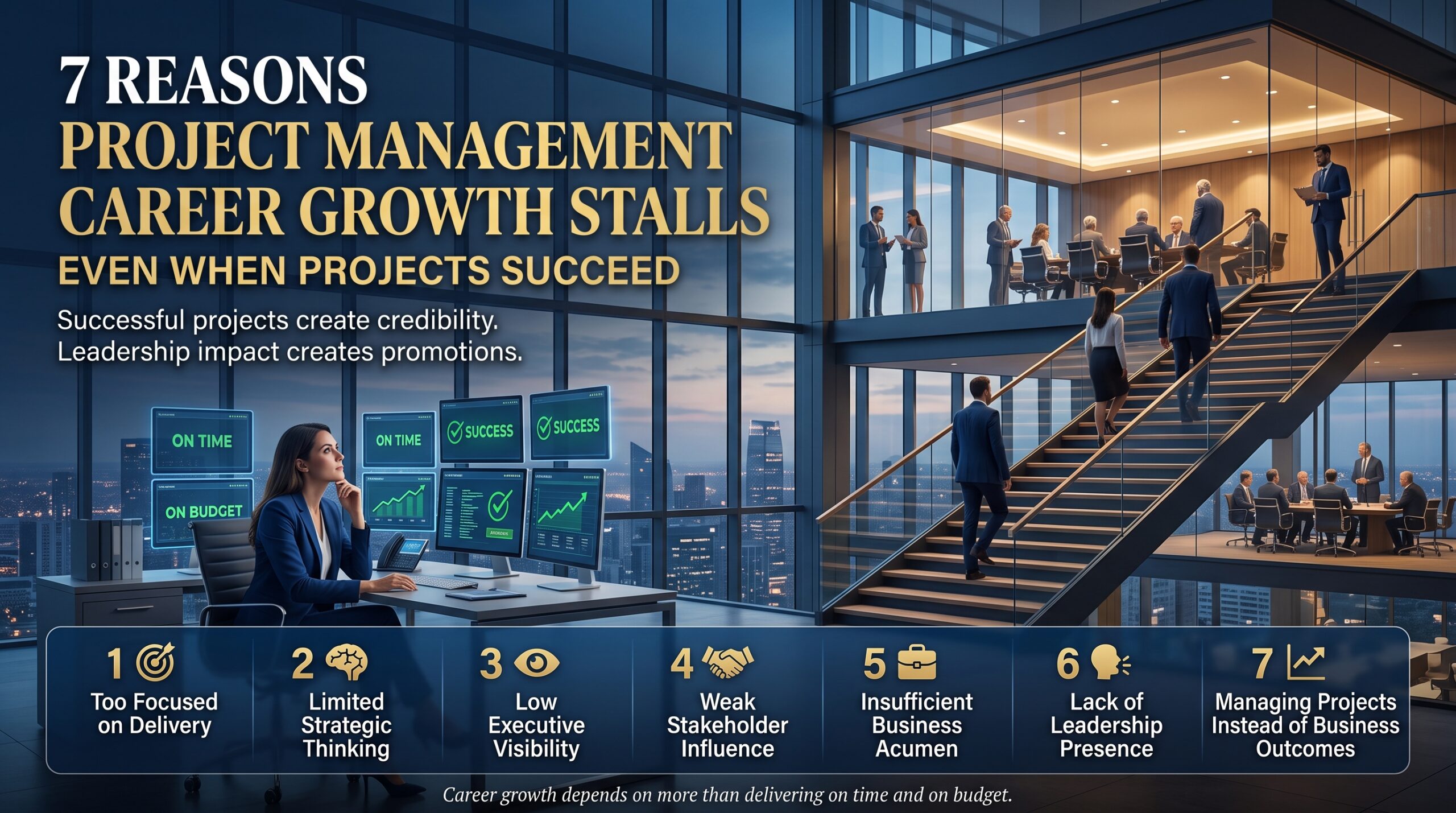
7 Reasons Project Management Career Growth Stalls Even When Projects Succeed
1. Your results are invisible above your sponsor
Most project managers report to one person. If that person doesn’t repeat your wins to the next level, those wins might as well not have happened. Senior leaders often hear about a project only when something goes wrong, so a quiet success can go unnoticed for years and quietly slow your project management career growth.
2. You’re reporting activity instead of outcomes
“Tasks 87% complete” tells an executive almost nothing. “We’ll hit the regulatory deadline and avoid a costly penalty” tells them everything. If your updates read like a to-do list, people will treat you like the person who manages the to-do list.
3. You’ve collected stakeholders but not sponsors
Stakeholders are people who care about your project. Sponsors are people who care about you. A stakeholder register won’t help in a promotion discussion, but a senior leader who has watched you handle a crisis and is willing to say so will.
4. Your skills and credentials haven’t kept pace
Methods change. Agile, hybrid delivery and benefits-focused governance are now common expectations on many programs. If your toolkit is five years old, a hiring manager can tell, and project management career growth slows down. A structured course such as AgilePM Foundation, followed by AgilePM Practitioner, closes that gap quickly and gives you a recognised credential to point to.
5. You say yes to everything
Reliable people get handed every troubled project, every admin-heavy initiative and every “quick favour”. It feels like building goodwill. In reality it fills your calendar with work that doesn’t stretch you. Top performers are choosy. They pick assignments that add scale, visibility or a new skill.
6. You’ve stayed in one lane
Ten years in the same industry using the same methodology can look like depth, or it can look like a ceiling. Moving from construction into IT, or from waterfall into Agile, shows adaptability, and adaptability is exactly what senior roles ask for.
7. You’re waiting to be noticed
Hard work doesn’t speak for itself. Nobody is keeping score on your behalf. Careers move when someone says out loud what they want and asks what the path looks like.
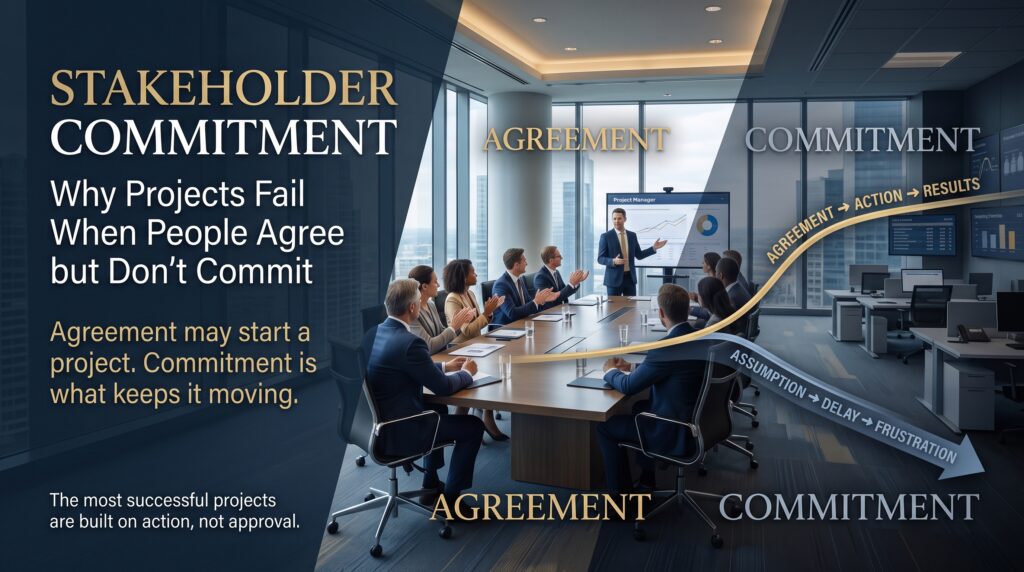
IMAGE 2 (place after reason 7) | File name: why-project-managers-stall.webp | Alt text: Why project management career growth stalls when project managers only focus on delivery
What Top Project Leaders Do Differently
Watch the project leaders who keep climbing and you’ll notice a pattern. They aren’t always the best planners. They’re the best at connecting their projects to things the organisation actually cares about.
They speak in business outcomes
Instead of “we delivered on time”, they say “we cut onboarding from six weeks to three, which frees the sales team to take on more clients”. Same project, completely different weight. Before every status update, ask yourself “so what?” and answer it in one sentence.
They manage their sponsors on purpose
Top leaders schedule short, regular catch-ups with senior people, give a heads-up before bad news lands and ask for candid feedback. Over time that builds the trust that opens the door to bigger programs and faster project management career growth.
They build other leaders
Nobody gets promoted into leadership for being indispensable. They get promoted for making themselves replaceable. Coaching a junior coordinator, documenting your approach and delegating real responsibility tells the business you’re ready to run something larger.
They treat learning like a project
They set a goal, pick a deadline and track progress. That might be a certification, a stretch assignment or a short course on Agile delivery. If you’re short on time, online project management courses let you study around work rather than instead of it.
They get comfortable with uncomfortable conversations
Saying no to scope creep, escalating a risk early, pushing back on an unrealistic date. These moments are where leadership becomes visible. Delivering quietly is fine. Delivering honestly is what gets remembered.
A 90-Day Plan to Restart Your Project Management Career Growth
You don’t need a reinvention. You need one focused quarter. Try this:
- Weeks 1–2: Audit your wins. List your last five projects with one measurable business result for each, such as money saved, time cut, risk avoided or customers gained.
- Weeks 3–4: Book a career conversation. Ask your manager what “next level” looks like in specific terms, then ask what evidence they’d need to see.
- Weeks 5–6: Choose a sponsor. Pick one senior leader outside your direct reporting line and ask for 20 minutes of their time each month.
- Weeks 7–10: Close one skill gap. Enrol in a course that matches the gap, then apply one new technique on a live project straight away.
- Weeks 11–12: Take a bigger swing. Volunteer for the cross-team initiative, the troubled program or the board presentation everyone else avoids.
- Day 90: Rewrite your résumé and LinkedIn profile around outcomes, not duties.
Which Courses Support Project Management Career Growth in Australia?
The right training for project management career growth depends on where you’re stuck. If you’re new to structured delivery or switching methods, the AgilePM Foundation course gives you the language and framework for Agile project management without throwing away governance. If you already know the basics and need to prove you can apply them under pressure, the AgilePM Practitioner course goes deeper into tailoring and real-world application.
You can browse the full range of project management courses and choose live online, in-house or city-based options. Looking for training in Melbourne, Sydney, Brisbane, Perth, Adelaide or Canberra? The locations page shows what’s available. You can also compare wider project management training options before you decide.
It’s also worth looking beyond any single provider. The Project Management Institute publishes standards and research on the profession, the Australian Institute of Project Management offers professional membership and local networking, and the Agile Business Consortium is the body behind the AgilePM framework. Pair formal learning with community and you get credentials and connections.
Project Management Career Growth FAQs
Why am I not getting promoted even though my projects are successful?
Usually because project management career growth depends on visibility, influence and readiness for bigger scope, not delivery alone. Ask your manager for specific criteria, then build evidence against them using the 90-day plan above.
Is a project management certification worth it for career growth?
It can be a real boost to project management career growth, especially when it fills a skills gap or signals a methodology employers want. It works best alongside demonstrated results rather than instead of them. The FAQs page answers common questions about course formats and entry requirements.
How long does it take to move from project manager to senior project manager?
There’s no fixed timeline. It depends on your organisation, the size of the projects you’ve led and how visible your impact is. Many people speed things up by taking on larger scope and building sponsor relationships early.
Do I need Agile skills to advance in project management?
Agile and hybrid approaches are widely used across IT, government, finance and other sectors, so being comfortable in both styles keeps your options open.
Can I study online while working full-time?
Yes. Live virtual online classes and in-house options are available, so you can fit learning around your job.
Final Thoughts: Make Your Work Hard to Overlook
Delivering successful projects will always matter. It’s the foundation. But project management career growth belongs to people who translate delivery into business impact, build relationships that outlast a single project and keep sharpening their skills on purpose.
Pick one idea from this article and act on it this week to move your project management career growth forward. If you’d like help choosing a course, contact our team or call 1300 649 299. You can also read more about us or browse the blog for more career guidance.