




Walk into any large organisation in Australia and you’ll find dozens of people holding the same project management certification, sitting at completely different levels. Some are still running individual projects a decade into their career. Others used the exact same credential as a launchpad into Director and Head of PMO roles within five or six years. The certificate on the wall is identical. The trajectory is not. This article breaks down why that gap exists, and what employers in Sydney, Melbourne, Brisbane, Perth, Adelaide and Canberra are actually promoting for in 2026.
The Project Management Certification Trap: Why a Certificate Isn’t a Career Plan
A project management certification proves you understand scope, schedule, budget and risk frameworks well enough to pass a structured exam. It does not prove you can hold a steering committee’s confidence during a failing programme, negotiate scope with a difficult sponsor, or build a business case a CFO will actually fund. Employers know the difference. That is why two candidates with the same project management certification can sit in the same promotion panel in Sydney and walk away with opposite outcomes.
- Project Manager A treated certification as the finish line and kept running the same size and type of project year after year.
- Project Manager B used certification as a base and kept adding programme-level exposure, stakeholder wins and commercial results to their track record.
Only one of them looks like Director material to a promotion committee. The other still looks like a solid individual contributor.
What Actually Keeps Project Managers Stuck
1. No Evidence of Programme or Portfolio-Level Impact
Running one project well is expected. Directors are chosen because they’ve shown they can juggle multiple interdependent projects, manage competing priorities across teams, and protect an overall budget not just a single project’s numbers. Without structured exposure through an advanced project management certification course, this experience rarely happens by accident.
2. Treating the Resume Like a Checklist
“PMP certified” or “project management certification holder” is now a commodity line thousands of resumes say it. The resumes that get shortlisted for Director roles quantify impact: budget size managed, number of stakeholders coordinated, percentage of projects delivered on time and under budget.
3. Ignoring the Commercial and People Skills Employers Now Expect
Modern Director-track roles blend project delivery fundamentals with commercial acumen, executive communication, and people leadership. A project management certification holder who never builds these skills plateaus fast, no matter how clean their Gantt charts are.
4. Staying in One City’s Job Pool Without Building a Network
Professionals who only apply through job boards in one metro area miss the referral-driven roles that never get publicly advertised common in tighter markets like Adelaide and Canberra where senior hires happen through word of mouth.
What Employers Actually Reward: The Director-Track Profile
Across Sydney, Melbourne, Brisbane and Perth job listings, a consistent pattern shows up in roles that lead to Director and PMO leadership. Employers reward:
- Verified programme-level delivery multi-project or portfolio experience, not just a single project’s success story.
- Progression beyond entry-level certification advanced credentials, agile-at-scale frameworks, or change management training signal a career, not a one-off exam.
- Executive communication the ability to brief a steering committee and defend a business case under pressure.
- Commercial awareness comfort with budgets, vendor contracts and ROI conversations, not just schedules.
- Consistent, visible track record documented outcomes across roles that a panel can independently verify.
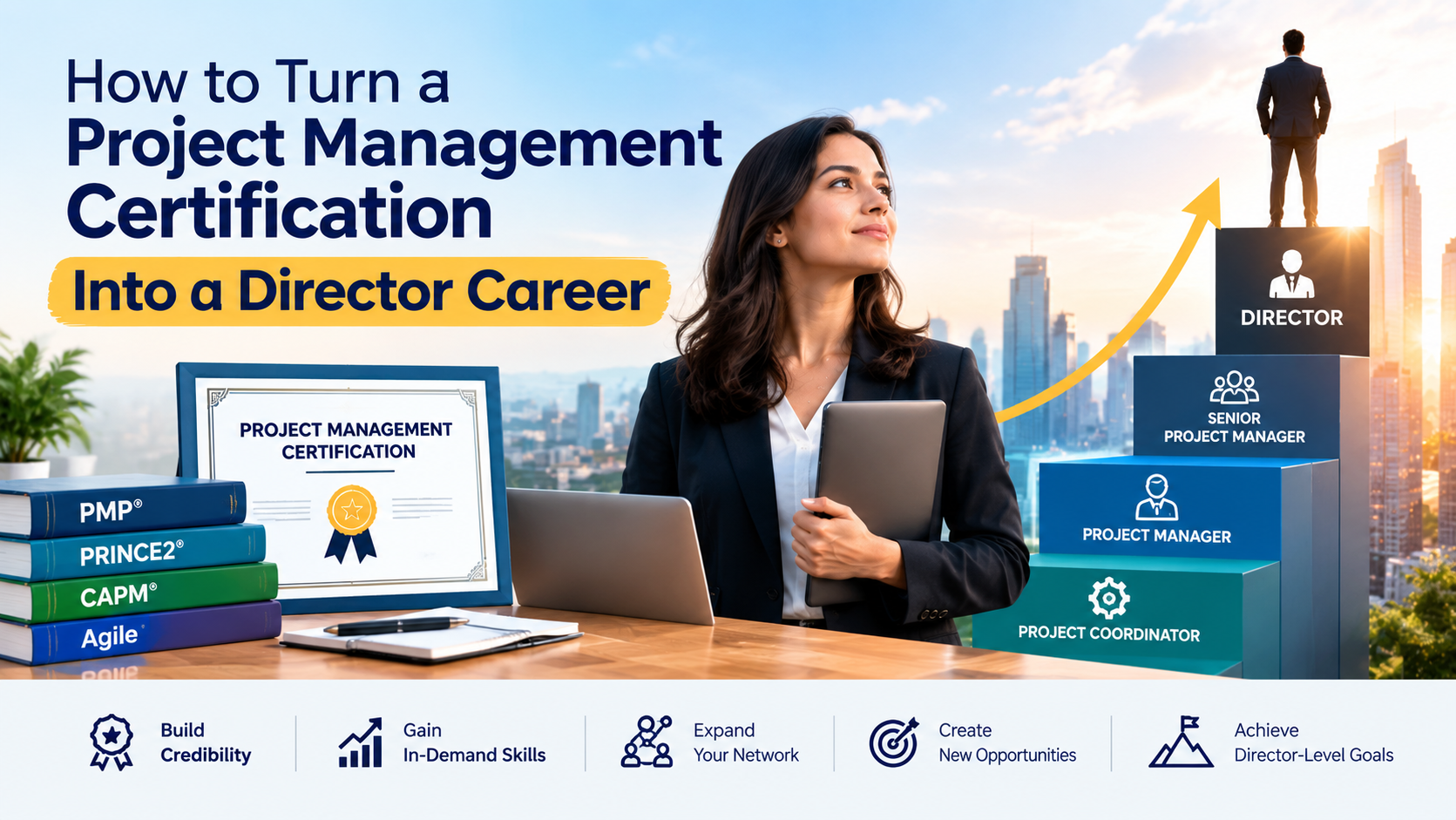
How to Turn a Project Management Certification Into a Director Career
Step 1: Audit Your Delivery Track Record
If every project on your resume is roughly the same size and complexity as the one before it, that’s the first gap to close. A structured refresher through a guided project management certification course helps you plan the next step deliberately rather than waiting for it to happen.
Step 2: Build a Portfolio of Business Outcomes, Not Just Deliverables
Document three to five projects where you can point to a measurable business result: cost saved, revenue enabled, risk avoided. Put this in a one-page career summary and reference it directly in promotion conversations.
Step 3: Target the Right Cities and Employers
Demand for Director-track project professionals is strongest right now in Sydney, Melbourne and Brisbane, with steady growth in Perth and Adelaide driven by infrastructure, resources and government programmes. Search local listings on Seek and LinkedIn Jobs to benchmark salaries in your city before negotiating.
Step 4: Keep Stacking Credentials and Frameworks
Employers consistently promote project managers moving toward portfolio management, agile-at-scale, or change leadership credentials. The Project Management Institute (PMI) outlines the logical next steps after an entry-level project management certification.
Real Salary and Promotion Signals: What the Data Shows
Government labour data from the Australian Bureau of Statistics and job-board salary guides consistently show project and programme leadership roles earning well above the national average wage once professionals move from individual delivery into portfolio-level responsibility. The gap between a stagnant project management certification holder and a promoted Director is rarely the exam score — it’s everything built after it.
Frequently Asked Questions
Is a project management certification enough to reach Director level in Australia?
It’s enough to get interviews and open early-to-mid career roles, especially in Sydney and Melbourne. Director-level roles typically require the certification plus demonstrated programme or portfolio experience and commercial results.
How long does it take to go from Project Manager to Director?
Most professionals who actively pursue programme-level exposure and apply strategically move from Project Manager to Director within five to eight years.
Which Australian cities have the strongest demand for Director-track project professionals?
Sydney, Melbourne and Brisbane currently list the highest volume of senior roles, with Perth and Adelaide growing steadily on the back of major infrastructure and resources projects.
Ready to Move Past the Project Manager Plateau?
A structured, mentor-led project management certification course closes the exact gaps outlined above programme-level exposure, business case skills and career guidance tailored to the Australian job market. Explore course options at projectmanagementcoursesonline.au, read city-specific guidance for Sydney and Melbourne, or contact the team to discuss which track fits your goals.