


If you’re comparing the AgilePM certification salary Australia outcomes for Foundation versus Practitioner before you commit to either one, you’re asking the right question early. AgilePM is one of the most widely recognised Agile project management certifications globally, and the gap between Foundation-level awareness and Practitioner-level capability is bigger than the exam difficulty alone suggests. This guide breaks down what each level actually covers, how they differ in practice, what impact each has on salary and job prospects across Australian cities, and which one you should do first.
What Is AgilePM Certification?
AgilePM (Agile Project Management) is a certification scheme accredited by APMG International, built on the DSDM (Dynamic Systems Development Method) framework. Unlike Scrum, which focuses on team-level delivery, AgilePM is specifically designed for project managers who need to blend Agile flexibility with the governance, planning and control expected in larger or more formal project environments. It’s why AgilePM has become popular with professionals moving from traditional project management into Agile-run organisations, rather than developers coming from a pure Scrum background.
AgilePM Foundation vs Practitioner: What’s the Difference?

AgilePM Foundation
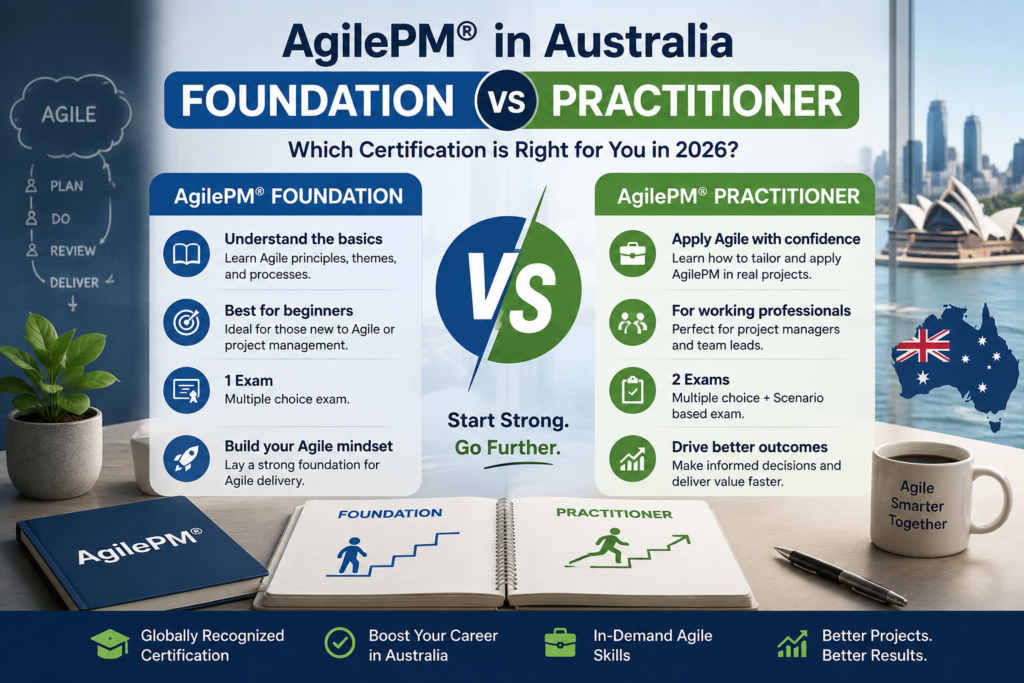
Foundation is the entry-level qualification. It tests your knowledge and comprehension of AgilePM’s philosophy, principles, and key concepts things like the DSDM lifecycle, MoSCoW prioritisation, timeboxing, and the roles within an Agile project team. There are no formal prerequisites, and the exam is closed-book multiple choice. It proves you understand the AgilePM approach conceptually, but it doesn’t test your ability to apply it in a live project.
AgilePM Practitioner
Practitioner is the applied, scenario-based level. Candidates must already hold the Foundation certificate to sit it, and the exam presents real project situations that require you to configure Agile lifecycles, apply appropriate techniques, manage requirements in an Agile context, and demonstrate control and governance throughout a project. This is the level that actually validates you can run an Agile project, not just describe one and it’s the qualification most employers mean when a job ad simply says “AgilePM certified.”
AgilePM Certification Salary in Australia 2026
Neither Foundation nor Practitioner guarantees a specific salary figure pay depends on your role, industry, seniority and location. What’s more useful is understanding how each level tends to affect your position in the job market.
Salary Impact: Foundation-Level
AgilePM Foundation mostly helps at the shortlisting stage. It signals baseline Agile literacy for project coordinator, business analyst and junior project management roles, and it’s often a stepping stone rather than the credential that directly moves your pay. Many candidates use it to demonstrate genuine interest in Agile delivery before their employer invests in Practitioner-level training.
Salary Impact: Practitioner-Level
AgilePM Practitioner carries more weight, because it’s the qualification tied to actually running Agile projects with governance and control exactly what mid-to-senior project management roles require. Job ads for Agile Project Manager, Delivery Lead and Programme Coordinator roles frequently list AgilePM Practitioner specifically, and it tends to be treated similarly to other respected project management credentials when it comes to salary negotiation, particularly in industries like finance, government and enterprise IT where structured Agile governance matters.
AgilePM Salary and Careers by Australian City
Agile project management roles are advertised across every major Australian city. Melbourne and Sydney have the largest concentration of Agile delivery roles across finance, technology and enterprise transformation projects. Brisbane and Perth see steady demand from government and resources-sector project teams adopting Agile ways of working. Adelaide and Canberra have consistent opportunities tied to defence and public-sector digital transformation programs, where AgilePM’s governance focus fits particularly well with public-sector reporting requirements. According to Jobs and Skills Australia, ICT project management roles remain a steady, full-time occupation nationally, underlining consistent demand for certified project professionals across the country.
Which One Should You Get: Foundation or Practitioner?
- Complete beginner to Agile project management start with Foundation to build the vocabulary and core concepts
- Already working in project coordination or business analysis Foundation now, Practitioner once you’re applying Agile concepts on the job
- Experienced project manager moving into Agile-run organisations plan for both together, since Foundation is a prerequisite for Practitioner anyway
- Targeting Agile Project Manager or Delivery Lead roles specifically Practitioner is the level employers actually screen for
Because Practitioner requires the Foundation certificate first, most candidates in Australia study for both in the same training block rather than spacing them out over separate years it’s rarely more efficient to delay Practitioner once you’ve already invested the time in Foundation.
Career Path After AgilePM Certification
AgilePM Foundation and Practitioner typically sit alongside, rather than replace, broader project management experience. Common next steps include moving from Project Coordinator into Agile Project Manager or Delivery Lead roles, layering AgilePM on top of existing PRINCE2 or PMP experience for hybrid governance environments, or progressing into Programme Manager positions overseeing multiple Agile workstreams. Because AgilePM is vendor-neutral and framework-based rather than tool-specific, it also travels well across industries the same certification is respected in IT, government, construction and financial services project environments.
Is AgilePM Certification Worth It in Australia in 2026?
For project professionals working in or moving toward Agile-run organisations, yes particularly Practitioner. Foundation alone is a reasonable investment if you’re early in your career and want to build credibility quickly, but the real career impact shows up once you hold Practitioner, because it’s the level that actually proves you can run an Agile project with proper governance rather than just understanding the theory. If your organisation runs on pure Scrum with no governance overhead, a Scrum-specific certification might suit your day-to-day work better — AgilePM’s strength is specifically in blending Agile delivery with structured project control.
How to Get AgilePM Certified in Australia
The AgilePM Foundation course provides a comprehensive introduction to Agile project management concepts, frameworks and best practices, and is the ideal starting point for building a strong foundation in Agile project delivery. Once you’re ready to apply that knowledge practically, the AgilePM Practitioner course focuses on real-world implementation, helping you manage changing requirements, improve collaboration, and maintain control and governance throughout the project lifecycle. Both are available across major Australian cities and live online, so you can train alongside full-time work.
Steps to Get AgilePM Certified
- Confirm your starting point — new to Agile project management, or experienced and formalising your skills.
- Enrol in the AgilePM Foundation course and prepare for the closed-book multiple-choice exam.
- Pass the Foundation exam — this is a mandatory prerequisite before attempting Practitioner.
- Move into the AgilePM Practitioner course, focused on scenario-based application and governance.
- Sit the Practitioner exam once you’re confident applying AgilePM concepts to realistic project scenarios.
Not sure which pathway or city suits you best? Contact the Project Management Courses Online team to talk through course dates and delivery options, or check the FAQs page and About Us for more on how the training is structured.
Frequently Asked Questions
Do I need AgilePM Foundation before Practitioner?
Yes. AgilePM Practitioner has a mandatory prerequisite you must hold a valid Foundation certificate before you’re eligible to sit the Practitioner exam.
Which AgilePM level has the biggest salary impact in Australia?
Practitioner tends to carry more weight, since it validates your ability to actually run an Agile project with governance and control, which is what mid-to-senior Agile Project Manager and Delivery Lead roles specifically screen for.
Is AgilePM better than Scrum certification for project managers?
They serve different purposes. AgilePM suits project managers who need to blend Agile delivery with formal governance and control, while Scrum certifications suit those working within a single Scrum team. Many professionals in larger organisations hold both.
How long does it take to get AgilePM Foundation and Practitioner certified?
Course duration varies by provider and delivery format, but many candidates complete both Foundation and Practitioner training in the same structured block, since Practitioner builds directly on Foundation content.
Is AgilePM certification recognised across Australian industries?
Yes. AgilePM is vendor-neutral and framework-based, which is why it’s respected across IT, government, construction, defence and financial services project environments, not just one specific industry.