




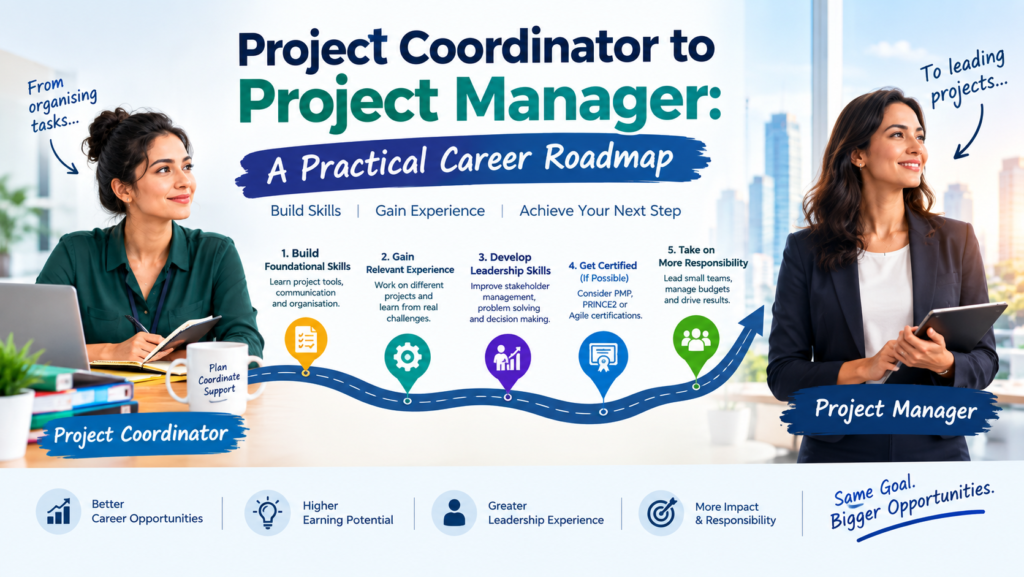
Moving from Project Coordinator to Project Manager is one of the most common career jumps in Australian project delivery and one of the most misunderstood. Many coordinators assume the promotion happens on tenure alone. In reality, employers look for a specific combination of certification, demonstrated ownership of deliverables, and stakeholder management experience before handing over a project manager title. This roadmap lays out exactly what that path looks like, stage by stage, so you know what to build next.
This guide is written for project support staff in Sydney, Melbourne, Brisbane, Perth, Adelaide and Canberra who want a structured plan rather than waiting for a promotion to appear.
What Does the Project Coordinator to Project Manager Path Look Like?
The typical route from Project Coordinator to Project Manager runs through four to five stages, each adding scope of ownership and a corresponding certification:
- Project Coordinator → Project Officer / Junior Project Manager
- Project Manager (small to mid-size projects)
- Senior Project Manager (complex, multi-stakeholder projects)
- Program Manager or PMO Lead
Some professionals move faster by combining structured PRINCE2 or PMP certification with deliberate exposure to budget and risk ownership; others take longer because they stay in a support-only capacity without pushing for planning and stakeholder responsibilities.
Stage 1: Project Coordinator Where the Roadmap Begins
As a Project Coordinator, you support the project manager with scheduling, documentation, status reporting, and coordinating meetings and action items. This role builds the administrative backbone of project delivery but rarely includes budget or risk ownership.
Core Responsibilities
- Maintaining project schedules, RAID logs and status reports
- Coordinating meetings, minutes and stakeholder communications
- Tracking action items and following up on outstanding tasks
- Supporting document control and change request logging
Certification to Start With
The recommended starting point on the path from Project Coordinator to Project Manager is PRINCE2 Foundation, which introduces formal project governance, stages, and roles the language employers expect a project manager to speak fluently.
Typical experience required: 0–2 years. Typical Australian salary: AU$65,000–$80,000.
Stage 2: Project Officer / Junior Project Manager
This stage is where coordinators start taking ownership of a workstream or a small project end-to-end, rather than only supporting someone else’s. Junior project managers begin managing a small budget, chairing their own status meetings, and escalating risks directly instead of just logging them.
Many professionals complete PRINCE2 Practitioner at this stage, which tests the ability to apply PRINCE2 to a real project scenario rather than just recall the framework.
Typical experience required: 2–3 years. Typical Australian salary: AU$80,000–$95,000.
Stage 3: Project Manager (Small to Mid-Size Projects)
This is the core destination on the Project Coordinator to Project Manager roadmap. At this stage you own the full project lifecycle scope, schedule, budget, risk, and stakeholder communication and report project status directly to sponsors.
Employers hiring at this level frequently ask candidates to compare methodologies; our PMP vs PRINCE2 Australia guide and Agile vs Traditional Project Management guide cover exactly this comparison.
Typical experience required: 3–6 years. Typical Australian salary: AU$105,000–$130,000.
Stage 4: Senior Project Manager
Senior Project Managers run larger, higher-risk projects — often with multiple workstreams, external vendors, and executive-level stakeholders. Running effective governance and catching problems early becomes essential at this level.
Senior project managers are expected to run structured project health checks throughout delivery, not just at the end of a project, to catch scope, schedule or budget drift before it becomes unrecoverable.
Typical experience required: 6–9 years. Typical Australian salary: AU$130,000–$155,000.
Stage 5: Program Manager / PMO Lead
At the top of the Project Coordinator to Project Manager roadmap sits the Program Manager or PMO Lead role, overseeing multiple related projects, portfolio-level reporting, and organisational project governance. Many professionals at this stage complete PMP certification alongside PRINCE2 to demonstrate breadth across methodologies, or add Agile/Scrum training for hybrid delivery environments.
Typical experience required: 9+ years. Typical Australian salary: AU$150,000–$185,000+.
Salary Guide: Project Coordinator to Project Manager, by Stage
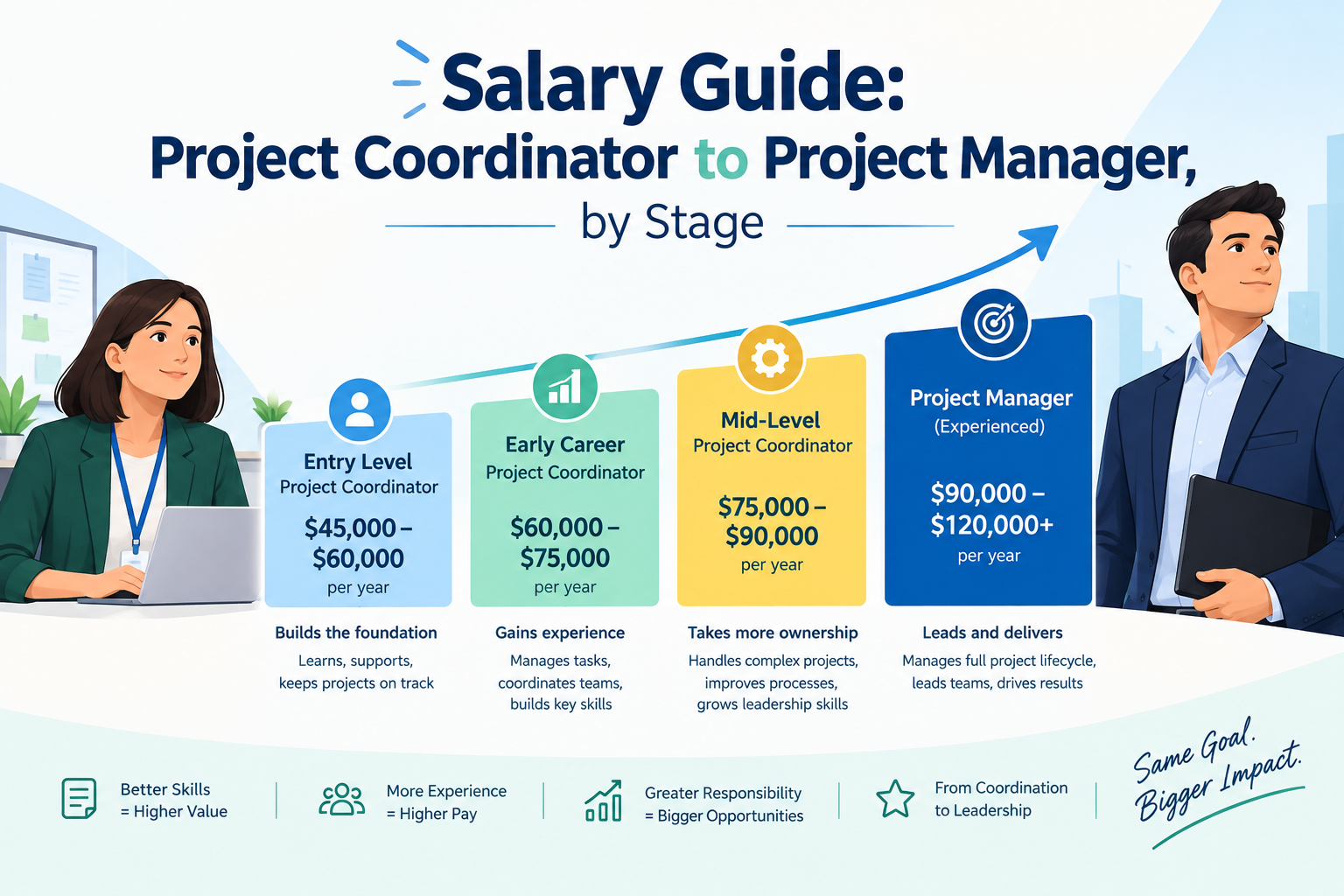
| Stage | Role | Certification | AU Salary Range |
| 1 | Project Coordinator | PRINCE2 Foundation | $65,000–$80,000 |
| 2 | Project Officer / Junior PM | PRINCE2 Practitioner | $80,000–$95,000 |
| 3 | Project Manager | PMP or PRINCE2 Practitioner | $105,000–$130,000 |
| 4 | Senior Project Manager | PMP + PRINCE2 | $130,000–$155,000 |
| 5 | Program Manager / PMO Lead | PMP + PRINCE2 + Agile/Scrum | $150,000–$185,000+ |
For a full breakdown by industry, state and experience level, see the Project Manager Salary Australia guide.
Skills You Need to Move From Project Coordinator to Project Manager
- Budget ownership and forecasting
- Risk and issue management, not just logging
- Stakeholder negotiation and executive reporting
- Formal governance frameworks (PRINCE2 stages, PMP process groups)
- Agile/Scrum fluency for hybrid delivery environments
- Confidence chairing meetings and owning decisions, not just documenting them
Project Coordinator to Project Manager Opportunities Across Australia
Demand for this transition differs slightly by city, but the roadmap itself is consistent nationally:
- Sydney — highest volume of project manager roles across finance, construction and government
- Melbourne — strong demand in infrastructure, healthcare and technology delivery
- Brisbane — growing government and infrastructure project pipelines
- Perth — resources and mining sector project management roles
- Adelaide — defence, government and utilities project delivery
- Canberra — federal government project and program management roles
Logitrain delivers PRINCE2, PMP and Agile/Scrum training live online across all these cities see logitrain.com.au for the full course calendar.
How Long Does the Transition Take?
Moving from Project Coordinator to Project Manager typically takes 3–6 years, but this can be shortened by pairing PRINCE2 or PMP certification with deliberate requests to own a small project or workstream early. Coordinators who complete PRINCE2 Practitioner within their first two years and actively seek ownership opportunities tend to reach the project manager title faster than those who wait to be asked.
Frequently Asked Questions
Do I need PMP or PRINCE2 to become a Project Manager?
Certification is not always mandatory, but Australian employers increasingly list PRINCE2 or PMP as a preferred or required qualification, especially for government and enterprise roles.
Can I go straight from Project Coordinator to Senior Project Manager?
It’s uncommon. Most employers expect demonstrated experience running a full project lifecycle at the standard project manager level first.
Is PRINCE2 or PMP better for making this transition?
It depends on your industry and target employer see our full PMP vs PRINCE2 Australia comparison for a detailed breakdown.
What should I prepare for a Project Manager interview?
Review our Project Manager Interview Questions and Answers guide for methodology-specific and situational questions.
Does Agile experience help the Project Coordinator to Project Manager transition?
Yes many Australian employers now run hybrid Agile/Waterfall delivery, so Agile or Scrum exposure alongside PRINCE2 or PMP is increasingly valued.
Start Your Project Coordinator to Project Manager Journey Today
Whether you’re starting with PRINCE2 Foundation or ready for PMP certification, Logitrain runs live online project management courses across Sydney, Melbourne, Brisbane, Perth, Adelaide and Canberra. Visit projectmanagementcoursesonline.au or logitrain.com.au to view upcoming dates and enrol.
Official career resource: PMI career development resources.